
“`html
Private Equity Value Creation Firms Compete on Quarterly Margin Reconciliation
Bottom line: The top PE value-creation consultancies (Bain Capital Private Equity, Boston Consulting Group, McKinsey Operations, Value Leverage Partners, FTI Consulting, AlixPartners) compete on whether they can reconcile margin gains to the quarterly EBITDA bridge without opening new questions in diligence. The firm that delivers measurable, defensible operating improvements without creating forensic risk wins the mandate.
When a deal partner evaluates a value-creation firm, the conversation starts with revenue growth and cost reduction but ends with one question: can you deliver an improvement that survives the QoE and ties out in the bridge without footnotes? The sponsor is not buying strategic advice. It is buying measurable enterprise-value improvement that closes without adjustment, and the consultant’s job is to deliver margin expansion that an accountant can verify and a buyer will pay for.
The market for value-creation services has fractured into three tiers. The top-tier operators (Bain Capital Private Equity’s internal value-creation team, BCG’s Principal Investors & Private Equity practice, McKinsey’s Private Equity & Principal Investors group) work on the largest platforms where the value-creation plan runs to eight figures and integration risk is existential. The second tier (boutiques like Value Leverage Partners, ClearRidge Capital, firm-attached operating groups) handles mid-market carve-outs and bolt-on sequences where cost synergies are modelled in spreadsheets and execution depends on whether management follows the playbook. The third tier is everyone else, pitching workshops and diagnostic assessments that rarely convert to operating mandates because the sponsor already knows what needs fixing and is looking for someone who can implement it, not describe it.
This review evaluates the top firms against the criteria that actually determine whether a mandate converts and whether the engagement renews: margin reconciliation discipline, repeatable playbook transferability, speed to first measurable result, forensic cleanliness at exit, and cost relative to the operating improvement delivered. It is written for PE deal partners selecting a value-creation partner for a new platform, operating partners managing a portfolio-wide capability build, and portfolio-company operators evaluating whether to bring in outside support or staff the function internally. It is not written for students researching career paths or aspirants building target lists.
Overview: What These Firms Actually Deliver
A PE value-creation firm is hired to execute the operating improvements underwritten in the investment thesis, which means translating the EBITDA bridge from the deal model into implemented changes that show up in the next quarter’s financials. The typical scope includes cost-structure redesign (vendor consolidation, SG&A reduction, procurement optimization), revenue-growth initiatives (pricing, sales-capacity expansion, product-line rationalization), operational efficiency (supply-chain reconfiguration, manufacturing footprint, headcount rebalancing), and integration execution for bolt-ons or carve-outs. The output is a set of implemented changes that move the margin, and the measure of success is whether those changes reconcile in the quarterly close without creating new questions for the diligence team at exit.
The best firms operate as embedded temporary executives: a former CFO who runs the finance-function consolidation for six months, a procurement VP who renegotiates the top 50 vendor contracts, a supply-chain operator who closes two warehouses and rebalances inventory. They show up with a repeatable methodology, execute the plan in 90 to 180 days, train the internal team to sustain it, and leave behind documented processes that survive turnover. The work is operational: which SKUs to discontinue, which facilities to close, which roles to eliminate, and how to sequence the changes so the business keeps running while the improvements land.
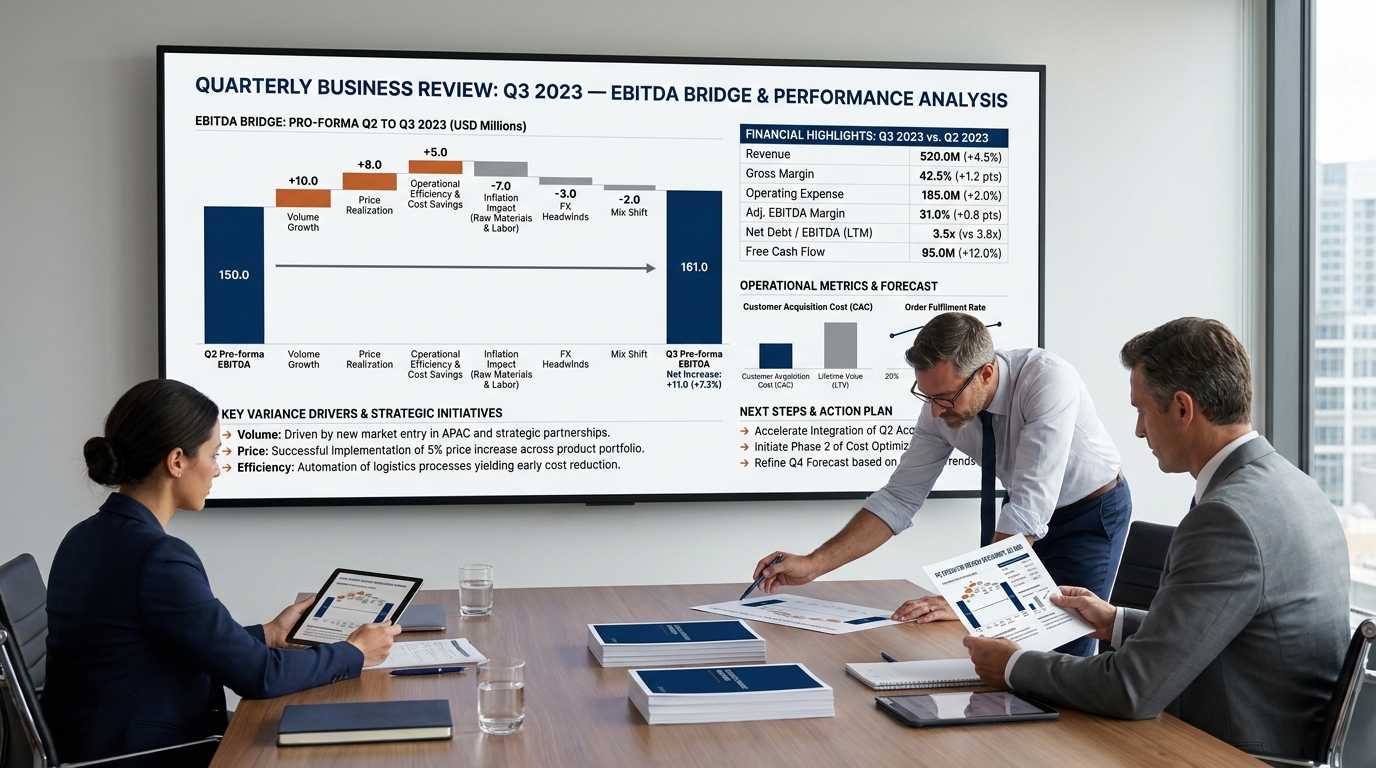
The worst firms sell diagnostic workshops that produce slide decks naming the same cost opportunities the deal team already identified in diligence, then propose a six-month implementation phase that requires hiring three consultants at $15,000 per week with no guarantee the savings will materialize. The sponsor pays $500,000 for a diagnosis it already has and watches the operating partner try to implement the recommendations with a management team that does not trust the consultant’s numbers and cannot reconcile the forecast savings to the actual P&L.
Who These Firms Are For
Top-tier value-creation firms serve sponsors managing platforms in the $100M to $500M EBITDA range where a 200-basis-point margin improvement translates to $2M to $10M in annual run-rate EBITDA and the exit multiple rewards operational discipline. The typical buyer is a deal partner who needs the value-creation work scoped and sequenced before close, an operating partner managing a portfolio-company CEO through a cost-reduction program, or a CFO at a portco who has been handed a margin-improvement target and lacks the internal capacity to deliver it while running the base business.
These firms are for sponsors buying performing businesses with identified margin-expansion opportunities that the current management team cannot execute without outside support. The mandate converts when the operating partner believes the consultant will deliver a result the CFO can defend. Funds with dedicated operating partners, former CEOs on the team, or portfolio companies large enough to hire their own turnaround consultants can staff value creation internally. Sponsors buying distressed assets where the value-creation plan is existential require a restructuring specialist, which is a different engagement.
Evaluation Criteria
A value-creation firm is evaluated on five operating measures. First, margin reconciliation discipline: does the delivered improvement tie out in the quarterly financials without adjustment, or does it show up as a forecast that never materializes? Second, playbook transferability: can the methodology be handed off to the internal team and sustained after the consultant leaves, or does it require permanent external support? Third, speed to first result: how many days from kickoff to the first measurable margin improvement that shows in the P&L? Fourth, forensic cleanliness at exit: does the work create questions in the quality-of-earnings review, or does it pass without footnotes? Fifth, cost efficiency: what does the firm charge relative to the operating improvement delivered, measured as fees divided by annual run-rate EBITDA gain?
The top firms score well on all five. Bain Capital Private Equity’s internal value-creation group delivers cost reductions that reconcile in the quarter they are implemented, hands off documented processes that the portco CFO can sustain, delivers first savings within 60 days, passes QoE reviews without creating new diligence risk, and charges fees that represent 10% to 15% of the first-year EBITDA improvement. The second-tier firms score well on three or four but stumble on reconciliation or forensic cleanliness. The third tier delivers workshops and diagnostics that do not convert to measurable margin improvement and cannot be evaluated on any of these five criteria because the engagement ends before implementation begins.
Pros: What the Top Firms Do Well
The top value-creation firms bring three capabilities that justify their fees. First, they operate with repeatable, tested methodologies that have been deployed across dozens of portfolio companies in the same sector, which means they know which cost levers move fastest, which vendor categories yield the highest savings, and which organizational changes create the least operational disruption. A procurement specialist who has renegotiated enterprise software contracts at 20 PE-backed SaaS companies knows the vendor pricing bands, the discount thresholds, and the contract terms that matter, and can deliver a 15% to 25% cost reduction in 90 days without breaking the implementation.
Second, they provide air cover for difficult decisions that the management team knows are necessary but cannot execute without external validation. Closing a facility, eliminating a product line, or reducing headcount by 20% are decisions a CEO struggles to defend to the board and the team, but when a recognized value-creation firm presents the analysis and recommends the action, the decision becomes credible and the CEO can proceed. The consultant is not smarter than the management team, but the consultant provides the third-party validation that makes the hard decision implementable.
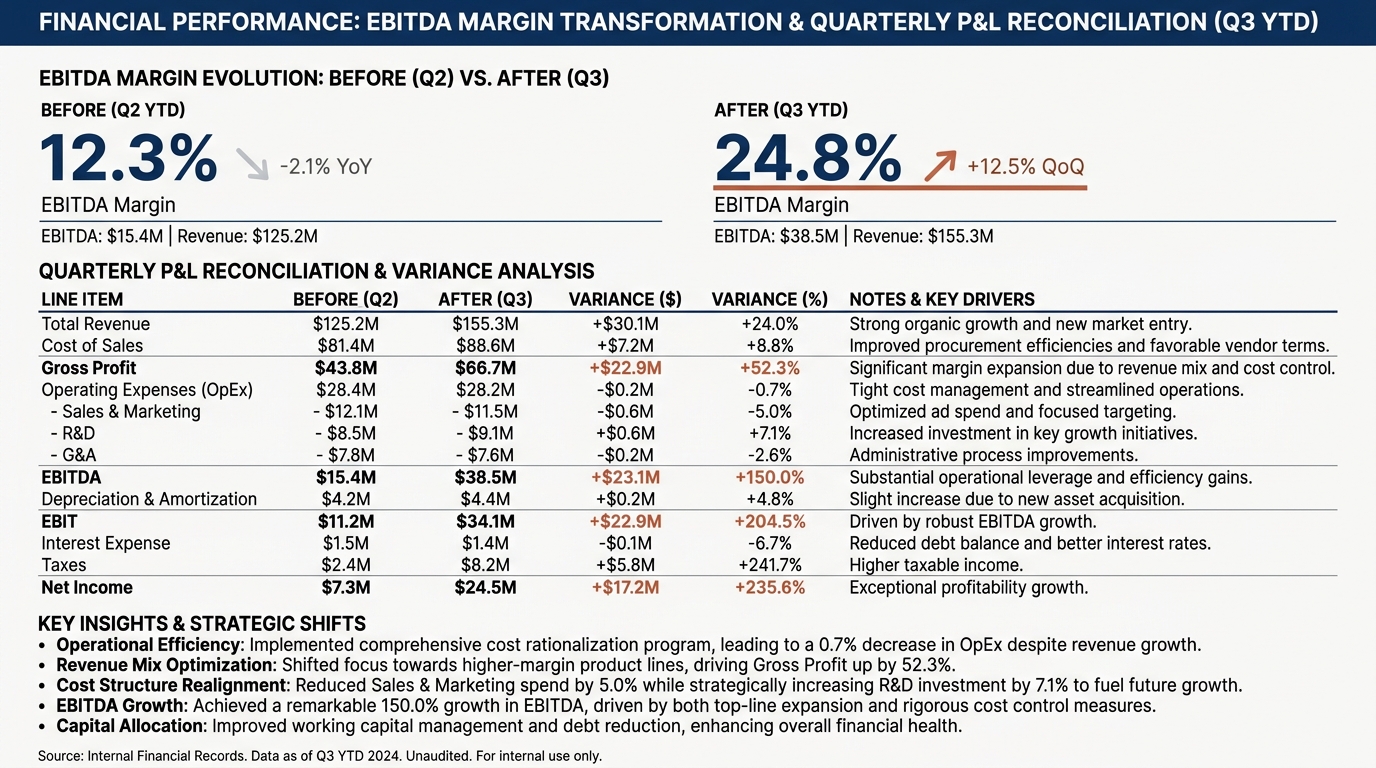
Third, the best firms deliver results that reconcile cleanly in quarterly financials and survive exit diligence without creating risk. They document baseline assumptions, track actual savings against forecast, flag variances in real time, and produce EBITDA bridges that tie out in the CFO’s close process. When the sponsor exits and the buyer’s QoE team reviews the margin-improvement claims, the work passes without adjustment because the savings were captured in the P&L rather than forecast in a model.
Cons: What Even the Best Firms Struggle With
Even the top-tier value-creation firms face three structural limitations. First, they depend on the quality of the portco’s internal data and financial controls, which means a business running on QuickBooks with inconsistent GL coding and no project-level P&L cannot support the analysis required to isolate cost-reduction opportunities or measure results. The consultant can recommend implementing better financial controls, but that is a six-month finance-transformation project that delays the margin-improvement work the sponsor hired the firm to deliver.
Second, they are expensive relative to the operating improvement delivered when applied to smaller platforms. A mid-market portco generating $10M in EBITDA with a 200-basis-point margin-improvement target is aiming for $2M in annual run-rate savings, and a six-month value-creation engagement costing $500,000 in consulting fees consumes 25% of the first year’s benefit. The math works at $50M EBITDA where the same 200-basis-point improvement yields $10M and the consulting fee represents 5% of the gain, but it does not work at smaller scale.
Third, most firms operate in multi-month diagnostic and implementation phases that delay measurable results, which creates tension with sponsors who need margin improvement in the first 90 days to hit the year-one EBITDA target. A 12-week diagnostic followed by a 16-week implementation phase means the first savings show up in month seven, which is too slow for a deal partner managing a value-creation plan that underwrote year-one margin expansion.
Pricing Reality
Top-tier value-creation firms charge $12,000 to $25,000 per week per senior consultant, with typical engagements running 12 to 24 weeks and requiring two to four consultants on site. A six-month cost-reduction program with two senior consultants costs $300,000 to $600,000 in fees, and a full-scale operational transformation with four consultants over nine months runs $900,000 to $1.4M. Firms price on a time-and-materials basis for diagnostic work and often shift to success fees or fixed-price deliverables for implementation, with success fees typically structured as 10% to 20% of realized annual run-rate EBITDA improvement verified in the quarterly close.
The math works when the engagement delivers $5M to $10M in annual EBITDA improvement and the consulting fees represent 10% to 15% of the gain, but it breaks when applied to smaller platforms where a $2M margin improvement cannot support a $500,000 consulting bill. The pricing model assumes the sponsor is managing a portfolio company at scale where the cost-reduction opportunity justifies the fee, and the firm walks away from mandates where the economics do not work.
Alternatives
Sponsors evaluating value-creation firms have three structural alternatives. First, staff the function internally by hiring a former operating partner, CFO, or COO who has run value-creation programs at other funds and can execute the work without external consultants. This works for larger funds managing ten or more portfolio companies where the operating partner’s cost is amortized across the portfolio, but it does not work for smaller sponsors managing three to five platforms where the fixed cost of a $300,000 to $500,000 operating partner cannot be justified.
Second, hire fractional or interim executives who embed in the portfolio company for six to twelve months and execute specific value-creation initiatives as temporary members of the management team. A fractional CFO can run a finance-function consolidation, a fractional COO can redesign the supply chain, and a fractional Chief Revenue Officer can rebuild the sales organization, typically at $15,000 to $25,000 per month rather than $100,000 per month for a full consulting team. The challenge is finding operators with the specific sector experience and PE operating discipline required to deliver results that reconcile cleanly and survive diligence.
Third, use specialized execution partners for narrow, repeatable workstreams rather than hiring a generalist value-creation firm for the full program. A procurement optimization specialist can renegotiate vendor contracts and deliver 15% to 25% savings in 90 days for a fixed fee of $75,000 to $150,000. A revenue operations partner can implement CRM governance, attribution, and forecasting discipline in 60 to 90 days for $50,000 to $100,000. A technical value-creation partner can consolidate web properties, implement performance improvements, and build data infrastructure for $100,000 to $200,000 over six months. The total cost of three specialized partners running in parallel is often lower than a single generalist consulting team, and the results reconcile more cleanly because each partner owns a specific P&L line rather than sharing accountability across a broad transformation program.
Final Verdict
The best PE value-creation firms compete on one capability: delivering margin improvements that reconcile in the quarterly close and survive exit diligence without creating new questions. Bain Capital Private Equity, BCG, and McKinsey’s PE practices do this well at large scale. Boutique firms like Value Leverage Partners and operating-partner groups embedded in mid-market funds do it well at $30M to $150M platforms. The firms that struggle are the ones selling diagnostic workshops that never convert to measurable results, and the sponsors who lose are the ones paying $500,000 for analysis they already completed in diligence.
For deal partners selecting a value-creation firm, the decision rule is simple: hire the firm that can show you three portfolio companies where they delivered a margin improvement that reconciled in the quarterly financials and passed the QoE review at exit, with documented baseline assumptions and variance tracking. If the firm cannot produce that proof, do not hire them. For operating partners managing a portfolio-wide value-creation build, the better path is often to hire one strong fractional operator per major workstream (finance, procurement, revenue operations, supply chain) rather than a generalist consulting team, because the specialized partner delivers faster results at lower cost and owns the reconciliation.
For portfolio-company operators evaluating whether to bring in a value-creation firm or staff the work internally, the threshold question is whether the improvement opportunity justifies the consulting fee. A $10M EBITDA platform aiming for $2M in margin improvement cannot support a $500,000 consulting engagement, and the CFO is better served hiring a fractional finance leader or procurement specialist for $25,000 per month who delivers the same result over six months at one-third the cost. A $100M platform aiming for $20M in margin improvement can justify the full consulting team, but only if the sponsor negotiates success fees tied to realized EBITDA verified in the quarterly close rather than paying time-and-materials for diagnostic work that may never convert to measurable savings.
The value-creation consulting market will continue to bifurcate. The top firms will move upmarket to larger platforms where the economics justify their fees and their repeatable methodologies deliver measurable returns. The mid-market will increasingly turn to fractional operators and specialized execution partners who cost less, deliver faster, and own specific P&L lines rather than sharing accountability across broad transformation programs. And the firms stuck in the middle, selling diagnostic workshops and strategic advice without implementation accountability, will lose mandates to sponsors who have learned that margin improvement is an operating discipline, not a consulting deliverable, and that the consultant who cannot reconcile the savings in the quarterly close is not a value-creation partner but a vendor selling PowerPoint decks at $15,000 per week.
The firm that wins is the one that shows up with a tested playbook, delivers first savings within 60 days, reconciles every dollar of improvement to the P&L, documents the methodology so the internal team can sustain it, and passes the QoE review at exit without creating footnotes. The sponsors who pay for consulting work that produces forecasts rather than P&L improvements discover at exit that the margin improvement they underwrote in the deal model never materialized, and forecasts do not show up in the EBITDA bridge when the buyer’s accountants run the numbers.
“`