

A PE firm closes a $180 million acquisition of a B2B SaaS company. The management presentation shows 35% year-over-year growth, clean unit economics, and a product roadmap built for scale. Three months into ownership, the operating partner discovers the CRM holds duplicate records across three instances, the marketing automation platform runs on a separate tech stack with no attribution model, and the engineering team ships features without monitoring performance impact. Revenue growth continues, but no one can explain which channels drive it or whether the infrastructure will support another 12 months at this pace.
The sponsor needs someone who can diagnose the technical foundation, prioritize fixes that protect EBITDA, and execute the work without derailing the existing team. That role is not a consultant who delivers a slide deck. It is a technical value creation partner embedded inside the portfolio company, operating as an extension of the leadership team with both diagnostic capability and execution capacity.
The Gap Between Strategy Consulting and Internal Engineering Capacity
Most PE firms engage one of two resources when technical work surfaces during the hold period. The first is a strategy consultancy. These firms conduct assessments, map the current state, and produce recommendations. The output is typically a presentation with prioritized initiatives and estimated timelines. The second option is the portfolio company’s existing engineering or IT leadership, who already manage product development, infrastructure maintenance, and day-to-day operations.
Neither resource is designed for the work a technical value creation partner handles. Strategy consultancies diagnose but do not execute. They identify that the CRM contains 47% duplicate records and recommend a data cleansing initiative, but they do not stay to build the deduplication logic, test it against live records, or train the sales team on the new process. The deliverable ends when the presentation is delivered, and implementation responsibility transfers to the internal team.
Internal engineering teams execute but rarely have spare capacity for value-creation initiatives that sit outside the product roadmap. A VP of Engineering managing a team of twelve developers focused on shipping customer-facing features does not have bandwidth to re-architect the data warehouse, audit HubSpot workflows, or build a revenue attribution model for the CFO. The work is important, but it competes with feature velocity, bug fixes, and technical debt the team already struggles to address.
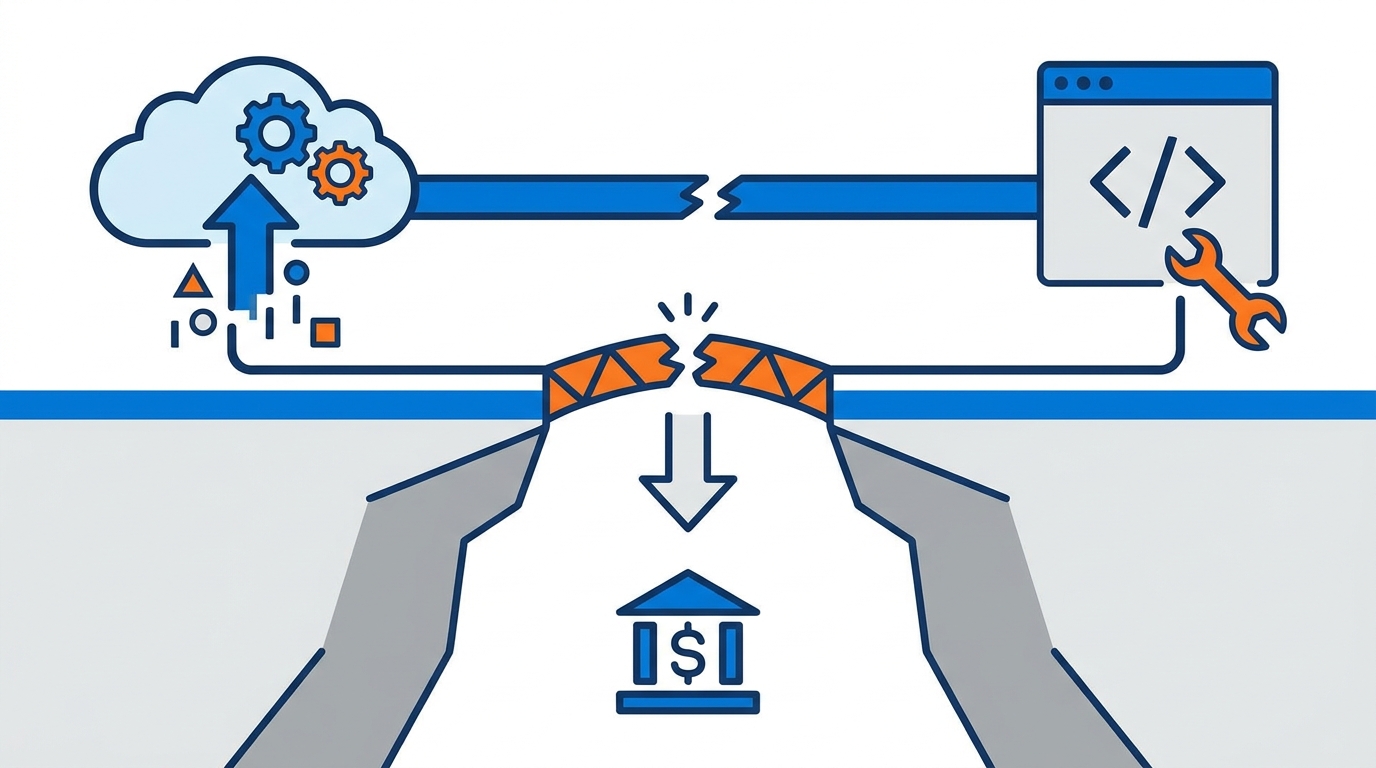
The technical value creation partner fills the space between these two. The role combines the diagnostic rigor of a consultancy with the execution capacity of an embedded engineering team. The partner conducts the assessment, writes the implementation plan, and then stays to do the work, often for 12 to 36 months, operating inside the portfolio company as a dedicated function.
What Embedded Operating Capacity Looks Like In Practice
A technical value creation partner does not operate as a vendor. The relationship is structured as a retained engagement, typically running $15,000 to $50,000 per month depending on scope, with the partner embedded in the portfolio company’s Slack channels, attending weekly leadership calls, and working directly with internal teams. The structure is closer to hiring a fractional CTO with a full execution team than engaging a consulting firm for a fixed-scope project.
The work begins with a diagnostic phase. This is not a high-level assessment. It is a detailed audit of the systems that generate, store, and report the numbers the sponsor relies on to measure performance. For a B2B portfolio company, that typically includes the CRM (Salesforce or HubSpot), the marketing automation platform, the data warehouse or reporting infrastructure, and any custom applications that feed into revenue operations. The diagnostic identifies where data quality breaks down, where manual processes introduce error, and where infrastructure constraints limit scale.
One portfolio company we worked with had grown from $8 million to $34 million in ARR over three years through aggressive outbound sales. The CRM showed pipeline coverage of 4.2x, but the CFO could not reconcile forecasted close dates with actual cash receipts. The diagnostic revealed that sales reps were updating deal stages without corresponding changes to close dates, finance was pulling reports from a stale data extract updated weekly, and approximately 18% of closed-won deals were missing contractual start dates in the system. The numbers in the management deck were directionally correct but could not be trusted for quarter-end forecasting.
The diagnostic produced a prioritized remediation plan. First, implement validation rules in the CRM to enforce data hygiene at the point of entry. Second, build a real-time sync between the CRM and the financial reporting system so finance stops working from week-old snapshots. Third, backfill missing contract data for the last 18 months of closed deals. The work took four months and required coordination with the sales operations lead, the finance team, and the CRM administrator. A consulting firm would have recommended these steps. The technical value creation partner stayed to execute them.
Execution Without Displacement
The embedded model works because it does not displace existing resources. The internal engineering team continues shipping product features. The sales operations lead continues managing day-to-day CRM administration. The technical value creation partner operates as an additional layer, focused exclusively on value-creation initiatives that improve operational performance, de-risk the next funding round, or prepare the business for exit.
This often includes work the internal team recognizes as necessary but cannot prioritize. Migrating from a monolithic WordPress instance to a headless CMS improves site performance and reduces hosting costs, but it is not a feature customers request, so it never reaches the top of the product backlog. Consolidating three separate HubSpot instances after an acquisition eliminates duplicate marketing spend and improves attribution, but the marketing team lacks the technical depth to execute the migration safely. Rebuilding the financial reporting pipeline so the board gets accurate cohort retention metrics matters for the next raise, but the data analyst hired six months ago is still learning the schema.
The technical value creation partner takes these initiatives off the internal team’s plate. The work is scoped, sequenced, and executed in parallel with the company’s existing operations, without requiring the VP of Engineering to reprioritize the roadmap or hire three additional developers.
Revenue Operations and Technical Infrastructure as Value-Creation Levers
Most PE value-creation plans emphasize commercial initiatives like sales process optimization, pricing changes, or go-to-market expansion. These are important, but they depend on infrastructure that is often fragile. A portfolio company cannot accurately measure sales rep productivity if the CRM does not track activity consistently. It cannot optimize pricing if the billing system cannot support tiered structures or usage-based models. It cannot expand into a new vertical if the website’s architecture cannot handle localized content or multi-currency transactions.
Technical infrastructure and revenue operations are not back-office functions. They are the foundation that determines whether commercial initiatives succeed or fail. A sponsor invests in a new VP of Sales to drive growth, but if the CRM cannot produce reliable pipeline reports, the VP spends the first six months building spreadsheets instead of coaching reps. A portco launches a new product line, but if the website’s CMS cannot support dynamic landing pages, the marketing team resorts to static PDFs and mailto links.

The technical value creation partner ensures the infrastructure keeps pace with the commercial plan. This work includes revenue operations (CRM hygiene, lead routing, pipeline reporting, attribution modeling), digital infrastructure (website performance, CMS migrations, headless architecture, API integrations), and data and reporting systems (data warehouse design, ETL pipelines, board-level dashboards, cohort analysis). All of it is execution-focused and measurable.
For one portfolio company in the travel sector, the value-creation plan called for launching a new booking platform to replace an aging PHP application that handled $22 million in annual gross bookings. The internal team, a mix of junior developers and one senior engineer, could maintain the existing platform but lacked the capacity to build the replacement while keeping the current system running. The technical value creation partner designed the new platform, built it using a modern stack, migrated the booking data without downtime, and trained the internal team to manage it post-launch. The work took nine months and unlocked the next phase of the commercial plan, which required dynamic pricing and multi-currency support the old platform could not handle.
Why Timing Matters In the Hold Period
Technical value-creation work is most effective when it begins early in the hold period, ideally within the first six months of ownership. Waiting until 18 months before exit to address CRM data quality, migrate to a scalable CMS, or build a proper reporting infrastructure compresses timelines, increases risk, and limits the value the work can generate.
Early engagement allows the technical value creation partner to sequence work logically. Data hygiene comes before advanced attribution modeling. CRM consolidation happens before implementing a new lead scoring system. Website performance optimization precedes a paid acquisition scale-up. Each phase builds on the previous one, and starting early provides time to course-correct if an initiative takes longer than expected or reveals additional complexity.
It also aligns technical work with the commercial plan. If the sponsor intends to enter a new vertical in year two, the website architecture needs to support it by the end of year one. If the plan includes rolling up two competitors in year three, the CRM and reporting infrastructure need to be ready to absorb their data without creating a mess. The technical value creation partner works backward from these milestones, ensuring the infrastructure is in place when the commercial team needs it.
One sponsor engaged us nine months after acquiring a B2B services business with a fragmented digital presence. The company had grown through acquisition, and each acquired entity ran its own WordPress site, CRM instance, and email platform. The consolidation plan called for unifying all entities under a single brand by month 18, but no one had mapped the technical dependencies. We started by auditing all systems, identifying where customer data lived, and building a migration plan that prioritized the highest-value accounts first. The work took 14 months, finishing two months before the rebrand launch. Starting earlier would have reduced timeline pressure. Starting later would have forced the company to delay the rebrand or accept data loss.
Vendor Relationships Versus Embedded Partnerships
The distinction between a vendor and an embedded partner shows up in how decisions are made. A vendor receives a scope of work, executes it, and delivers the result. The relationship is transactional. The vendor is accountable for completing the defined tasks, but not for whether those tasks solve the underlying problem or align with the broader value-creation plan.
An embedded technical value creation partner operates differently. The partner participates in strategic discussions, flags risks the internal team may not see, and adjusts course as priorities shift. When the CFO realizes that cohort retention metrics matter more than top-line revenue growth for the next board meeting, the partner reprioritizes the reporting roadmap. When an acquisition closes unexpectedly early, the partner accelerates the CRM integration plan. When a key hire leaves and the internal team loses capacity, the partner absorbs additional scope to keep value-creation initiatives on track.
This requires a different relationship structure. Embedded partners typically work on retainer rather than fixed-price contracts, allowing scope to flex as the portfolio company’s needs evolve. They join leadership calls, collaborate in shared Slack channels, and maintain visibility into the broader business context. The sponsor and portfolio company leadership treat the partner as part of the extended team, not as an external service provider.
For portfolio companies with lean internal teams, this model provides capacity the company cannot afford to hire directly. A $40 million ARR B2B SaaS company may not justify a full-time head of revenue operations, a dedicated data engineer, and a senior WordPress architect, but it needs all three skill sets to execute its value-creation plan. The embedded partner delivers that capacity at a fraction of the fully-loaded cost of three senior hires, with the flexibility to scale up or down as priorities change.
Measuring Impact In EBITDA and Exit Readiness
The output of a technical value creation partner is not measured in features shipped or projects completed. It is measured in EBITDA improvement, risk reduction, and exit readiness. These are the metrics PE sponsors care about, and they are the lens through which the partner’s work should be evaluated.
EBITDA improvement comes from operational efficiency gains. Consolidating three HubSpot instances into one eliminates $48,000 in annual software spend. Migrating to a headless CMS reduces hosting costs by 60% and cuts page load time from 4.2 seconds to 1.1 seconds, improving conversion rates and lowering paid acquisition cost. Automating manual reporting processes frees the finance team to focus on FP&A instead of data entry. Each of these initiatives flows through to the bottom line.
Risk reduction shows up as improved data quality, regulatory compliance, and system reliability. A clean CRM with enforced validation rules reduces the chance of pipeline misreporting. A properly architected data warehouse ensures the numbers in the board deck match the numbers in the financial system. A secure, performant website minimizes downtime and protects customer data. These improvements do not increase revenue directly, but they reduce the likelihood of a disastrous surprise during diligence or a post-close write-down.
Exit readiness means the business can withstand the scrutiny of a strategic or financial buyer without requiring material post-close remediation. Buyers care about data integrity, system scalability, and technical debt. A portfolio company with a clean tech stack, reliable reporting infrastructure, and minimal technical debt commands a higher valuation and closes faster than one with a fragmented CRM, an aging website, and a data warehouse held together by manual scripts.
One portfolio company we worked with had grown to $52 million in revenue but ran its entire operation on a single WordPress instance hosted on a shared server. The site went down twice during peak sales periods, costing an estimated $340,000 in lost bookings. The sponsor engaged us to migrate the site to a scalable infrastructure, implement CDN and caching, and build a staging environment so the internal team could test changes before pushing to production. The migration took five months. The site has not gone down since, and the sponsor estimates the avoided downtime alone justified the cost of the engagement.
When to Engage a Technical Value Creation Partner
Not every portfolio company needs an embedded technical value-creation partner. Businesses with strong internal engineering and operations teams, clean systems, and limited technical debt may not require external support. The model is most valuable for companies where the existing team is stretched, the infrastructure is fragile, or the value-creation plan includes technical initiatives the internal team cannot execute alone.
The engagement typically makes sense when one or more of the following conditions exist. First, the portfolio company has grown quickly, and the systems have not kept pace. CRM data quality is poor, reporting is manual, and no one is confident the numbers are accurate. Second, the value-creation plan includes infrastructure work the internal team lacks capacity to handle, such as a CMS migration, CRM consolidation, or data warehouse rebuild. Third, the company is preparing for an exit, and the sponsor needs to de-risk the technical diligence process by addressing known issues before a buyer surfaces them.
The diagnostic phase, which typically runs $15,000 to $25,000 for a light assessment or $45,000 to $75,000 for a comprehensive audit, determines whether the full engagement is warranted. The diagnostic produces a prioritized list of technical and operational improvements, each mapped to a specific value-creation outcome, timeline, and cost. The sponsor uses this to decide which initiatives to fund and when to begin execution.
For sponsors evaluating whether to bring in a technical value creation partner, the decision often comes down to opportunity cost. The alternative is not doing the work or asking the internal team to absorb it. Both options carry risk. Deferring infrastructure improvements increases the chance of a system failure, a data breach, or a diligence surprise. Overloading the internal team slows product development, increases burnout, and raises the likelihood that critical hires leave before exit. The embedded partner provides a third option: dedicated execution capacity focused on value creation, without displacing the existing team or delaying commercial initiatives.
Operating as an Extension of the Value-Creation Function
The technical value creation partner is not a replacement for an operating partner or a portfolio operations team. The role complements the sponsor’s existing value-creation function by providing execution capacity for technical and operational work that requires specialized skill and sustained effort. The operating partner sets the strategy, prioritizes initiatives, and tracks progress. The technical value creation partner executes the work.
This division of labor allows the operating partner to focus on higher-level decisions while the technical partner handles implementation. The operating partner does not need to know how to migrate a CRM, rebuild a data warehouse, or optimize a WordPress site. They need to know what success looks like, how the work aligns with the value-creation plan, and whether the initiative is on track. The technical partner owns the how.
For PE firms without a deep bench of operating partners, the embedded model provides access to senior technical and operational capacity without requiring a full-time hire. The partner works across multiple portfolio companies, bringing pattern recognition from prior engagements and adapting proven frameworks to each company’s specific context. This is particularly valuable for smaller funds or firms early in their operational value-creation journey.
DevriX operates as an embedded technical value creation partner for mid-market PE-backed companies, delivering revenue operations, digital infrastructure, and data engineering work that aligns with value-creation plans. Engagements typically run 12 to 36 months at $15,000 to $50,000 per month, depending on scope and complexity. We begin with a diagnostic to map the current state, identify risk, and prioritize initiatives. If the diagnostic surfaces work that warrants a full engagement, we stay embedded to execute it. More detail on the diagnostic process and embedded retainer model is available at CEO Hangout, which covers how PE sponsors structure these partnerships at the portfolio-company level.
Technical value creation is not an abstraction. It is measurable, EBITDA-accretive, and tied directly to the success of the hold period. The work requires someone who can both diagnose what is broken and stay to fix it. That is what an embedded partner delivers.
When the Embedded Model Does Not Fit
The embedded technical value creation partner is not appropriate for every portfolio company or every stage of the hold period. The model works when the company has reached a threshold of operating scale and complexity where specialized execution capacity produces measurable returns. Below that threshold, the cost of the engagement exceeds the value it creates.
Companies below $30 million in revenue rarely justify the engagement. At that scale, the technical and operational challenges are real, but they are typically addressable by the existing team with point solutions or short-term contractors. The cost of an embedded partner consumes too much of the operating budget relative to the improvement in EBITDA or exit multiple. The exception is a company preparing for rapid scale or facing a specific technical risk that threatens the business, such as a compliance failure or a catastrophic data-integrity issue.
The embedded model also does not work when the portfolio company lacks internal ownership of the value-creation plan. If the CEO does not understand the initiatives or the CFO cannot articulate how the work ties to financial outcomes, the engagement stalls. The technical partner can execute, but they cannot drive adoption or sustain momentum without internal accountability. The sponsor’s operating partner or portfolio-operations team must ensure that the portfolio company’s leadership is aligned before the engagement begins.
Finally, the model does not replace turnaround expertise or crisis management. If the company is bleeding cash, facing imminent regulatory action, or dealing with a catastrophic system failure, the embedded partner is not the right resource. Those situations require a different skill set and a different engagement structure. The embedded model is designed for value creation, not triage.
Measuring the Return on Technical Value Creation
The embedded technical value creation partner is not a cost center. The engagement is an investment in EBITDA improvement, risk reduction, and exit-multiple expansion. The return is measurable, though the metrics vary by initiative and by portfolio company.
Revenue operations work typically produces the most direct financial return. A CRM migration that improves forecast accuracy by 15% reduces revenue volatility and increases the confidence of the acquirer during diligence. A lead-routing engine that shortens response time by 40% increases conversion rates and accelerates pipeline velocity. A consolidated reporting layer that eliminates manual reconciliation saves 20 to 30 hours per month of finance-team time, which translates to $30,000 to $50,000 per year in avoided cost or reallocated capacity.
Digital infrastructure work produces returns through risk mitigation and operational efficiency. A site-performance optimization that reduces page-load time by two seconds increases conversion rates by 5% to 10%, depending on the business. A security remediation that brings the company into compliance with SOC 2 or GDPR eliminates a diligence objection and protects the company from regulatory penalties. A CMS migration that consolidates three legacy systems onto a single platform reduces hosting costs by 30% and eliminates the need for three separate vendor relationships.
Data engineering work produces returns through improved decision-making and reduced operational friction. A clean customer data model allows the company to segment more precisely, personalize more effectively, and measure more accurately. A unified data warehouse eliminates the need for manual exports and one-off analyses, which reduces the burden on the analytics team and increases the speed of strategic decisions. A forecasting model that integrates revenue, pipeline, and operational data produces more accurate projections, which improves capital planning and reduces the risk of a cash shortfall.
The sponsor measures the return by tracking the improvement in the relevant metric over the course of the engagement. If the initiative was forecasting accuracy, the sponsor compares the variance between forecast and actuals before and after the work. If the initiative was CRM data quality, the sponsor measures the percentage of complete records, the reduction in duplicate accounts, and the improvement in lead-to-opportunity conversion rates. If the initiative was site performance, the sponsor tracks the change in bounce rate, session duration, and conversion rate.
The return is not always immediate. Some initiatives, such as CRM migrations or data-warehouse builds, require three to six months of execution before the portfolio company sees measurable improvement. The sponsor must account for this lag when evaluating the engagement. The embedded model is designed for sustained value creation over the hold period, not for quick wins that generate a press release but do not move EBITDA.
The Commercial Case for the Embedded Model
The technical value creation partner is a strategic decision, not a tactical hire. The sponsor brings in the partner because the alternative carries more risk or more cost. The work must be done, and the internal team cannot do it without disrupting product development, delaying commercial initiatives, or increasing the likelihood of burnout and attrition.
The embedded model provides execution capacity without the overhead of a full-time hire. The sponsor does not pay for benefits, payroll taxes, or office space. The sponsor does not manage the partner’s workload or performance. The sponsor pays for output, not hours. If the engagement produces the expected improvement in EBITDA or exit multiple, the return exceeds the cost. If it does not, the sponsor exits the engagement and redirects the capital.
For mid-market sponsors, the embedded model is often the only way to access senior technical and operational capacity without building an internal team. A full-time VP of Revenue Operations with deep CRM and data-engineering expertise costs $200,000 to $300,000 per year, plus benefits and equity. That hire serves one portfolio company. An embedded partner at $25,000 per month costs $300,000 per year but can work across two or three portfolio companies, bringing pattern recognition and proven frameworks to each engagement. The economics favor the embedded model when the sponsor has multiple companies with similar technical and operational needs.
The embedded model also reduces the risk of a bad hire. A full-time VP who does not deliver results in the first six months is expensive to replace. The embedded partner can be ramped down or exited within 30 to 60 days if the engagement is not producing the expected results. The sponsor retains flexibility and avoids the sunk cost of a failed hire.
Technical value creation is not optional for sponsors targeting operational improvements during the hold period. The work must be done, and it must be done correctly. The embedded model provides a predictable, scalable way to deliver that work without displacing the portfolio company’s internal team or overloading the sponsor’s operating partners. The model works when the sponsor has clarity on the value-creation plan, the portfolio company has internal ownership of the initiatives, and the engagement is structured to produce measurable, EBITDA-accretive outcomes. That is the commercial case.
What Breaks the Model
The embedded model does not work in all situations. Some portfolio companies lack the internal capacity to implement the recommendations. Others have leadership teams that resist external guidance or view the engagement as a compliance exercise rather than a strategic initiative. The model requires internal ownership, and when that ownership is absent, the engagement produces reports and documentation but no measurable improvement in performance.
The most common failure mode is misalignment between the sponsor’s value-creation plan and the portfolio company’s operational priorities. The sponsor identifies CRM data quality as a key initiative during diligence. The portfolio company CEO agrees in principle but allocates no internal resources to the work. The embedded partner audits the CRM, documents the gaps, and proposes a remediation plan. The plan sits in a shared folder. No one implements it. The sponsor revisits the initiative six months later and finds no improvement. The engagement fails not because the work was incorrect but because the portfolio company did not execute.
Another failure mode is scope creep. The engagement begins with a defined initiative-CRM migration, forecasting model, site performance audit. The portfolio company requests additional work: a content strategy, a lead-scoring framework, a marketing automation build. The embedded partner accommodates the requests to maintain the relationship. The scope expands, the engagement loses focus, and the original initiative remains incomplete. The sponsor pays for additional capacity but does not see the expected improvement in the core metric. The engagement becomes a cost center rather than a value-creation lever.
The model also breaks when the sponsor treats the embedded partner as a cost-reduction initiative rather than a value-creation partner. The sponsor negotiates the lowest possible rate, compresses the timeline, and expects the partner to deliver the same outcomes with fewer resources. The partner delivers a minimum viable solution that meets the contract but does not move EBITDA. The sponsor concludes that the embedded model does not work, when the real issue was underinvestment in the engagement.
The embedded model works when the sponsor has clarity on the value-creation plan, the portfolio company has internal ownership of the initiatives, and the engagement is structured to produce measurable outcomes. When any of these conditions is absent, the model produces activity but not results.
How to Structure the Engagement
The embedded engagement begins with a scoping call. The sponsor outlines the value-creation initiatives identified during diligence. The portfolio company CEO describes the current state of the systems, the internal capacity of the team, and the timeline for execution. The embedded partner asks clarifying questions: What is the desired outcome? What metrics will define success? Who on the internal team will own implementation? What is the budget for execution, and what is the timeline for delivery?
The partner then proposes a phased engagement. Phase one is diagnostic. The partner audits the CRM, the forecasting model, the site performance, or the data infrastructure. The deliverable is a findings document that quantifies the gaps, prioritizes the work, and estimates the effort required to close the gaps. This phase typically runs four to six weeks and costs $10,000 to $15,000. The sponsor uses the findings to confirm that the value-creation initiative is feasible and that the portfolio company has the internal capacity to execute.
Phase two is execution. The partner works with the portfolio company’s internal team to implement the remediation plan. This phase is where the embedded model differs from a consulting engagement. The partner does not hand off a set of recommendations and exit. The partner stays in the engagement, working alongside the internal team, building the systems, training the users, and ensuring that the work produces the expected improvement in performance. This phase runs three to six months, depending on the complexity of the work, and costs $20,000 to $30,000 per month.
Phase three is optimization. The partner monitors the performance of the new systems, adjusts the configuration based on user feedback, and trains the internal team to manage the systems independently. This phase typically runs two to three months and costs $15,000 to $20,000 per month. At the end of phase three, the portfolio company has functional systems, trained users, and measurable improvement in the target metric. The embedded partner can then ramp down or shift focus to the next value-creation initiative.
The engagement is structured as a retainer, not a project. The sponsor pays a monthly fee for a defined scope of work. The fee is fixed, so the portfolio company knows the cost in advance and can budget accordingly. The embedded partner is accountable for delivering the defined outcomes within the agreed timeline. If the work takes longer than expected, the partner absorbs the cost. If the work is completed ahead of schedule, the engagement can ramp down early, and the sponsor redirects the capital.
The retainer model provides predictability for both parties. The sponsor knows the monthly cost and can track the return by measuring the improvement in the target metric. The embedded partner knows the scope and can allocate resources accordingly. The model works when both parties have clarity on the outcomes, the timeline, and the internal resources required to execute.
The Difference Between Embedded and Fractional
The embedded model is not the same as a fractional executive. A fractional CFO or fractional CMO is a senior leader who works part-time for the portfolio company, typically 10 to 20 hours per week, providing strategic guidance and decision-making support. The fractional executive attends board meetings, reviews financial plans, and advises the CEO on hiring, budgeting, and commercial strategy. The deliverable is advice, not execution.
The embedded partner provides both advice and execution. The partner diagnoses the problem, proposes the solution, and implements the solution alongside the internal team. The embedded partner does not replace a full-time executive. The embedded partner complements the internal team by providing specialized technical and operational capacity that the team does not have in-house. The engagement is hands-on, not advisory.
The distinction matters because sponsors sometimes conflate the two models. A sponsor hires a fractional executive, expecting execution, and is frustrated when the engagement produces recommendations but no measurable improvement in performance. A different sponsor hires an embedded partner, expecting high-level strategic guidance, and is frustrated when the partner focuses on CRM configuration, data-warehouse builds, and system integrations rather than board-level strategy. The models serve different needs, and the sponsor must be clear on which model fits the value-creation plan.
The embedded model is the right fit when the portfolio company needs specialized technical and operational capacity to execute a defined initiative-CRM migration, forecasting model, data infrastructure, site performance. The fractional model is the right fit when the portfolio company needs senior strategic guidance but has the internal capacity to execute. In some cases, the sponsor uses both: a fractional CFO to guide financial planning and an embedded partner to build the forecasting model and data infrastructure that support the CFO’s work. The two models are complementary, not mutually exclusive.
Where the Model Is Heading
The embedded model is becoming standard practice for mid-market sponsors focused on operational value creation. The model provides a predictable, scalable way to deliver technical and commercial initiatives without building an internal operating team or overloading the portfolio company’s existing staff. As sponsors shift from financial engineering to operational improvements, the demand for embedded partners with deep technical and operational expertise will increase.
The next phase of the model will involve more specialization. Today, most embedded partners are generalists who can work across CRM, data, forecasting, and site performance. As the market matures, sponsors will look for partners with deep expertise in specific domains: revenue operations, data engineering, marketing automation, digital infrastructure. The embedded partner who can demonstrate measurable EBITDA improvement in a specific domain will command higher rates and longer engagements.
The model will also expand into earlier-stage deals. Today, most embedded engagements occur in the middle market, where portfolio companies have $30 million to $500 million in revenue and established systems that need optimization. As sponsors move into lower-middle-market deals-companies with $10 million to $30 million in revenue-the need for embedded technical and operational capacity will increase. These companies have less internal capacity, less mature systems, and more execution risk. The embedded model provides a way to de-risk the value-creation plan without hiring a full-time team.
The embedded model is not a replacement for internal talent. The portfolio company still needs a full-time team to run the business. The embedded partner complements that team by providing specialized capacity for defined initiatives. The model works when the sponsor has clarity on the value-creation plan, the portfolio company has internal ownership, and the engagement is structured to produce measurable outcomes. That is how technical value creation becomes a commercial lever rather than a cost center.
