Most deal models treat revenue synergies and cost synergies as equally achievable, and that assumption is where value disappears before the integration starts.
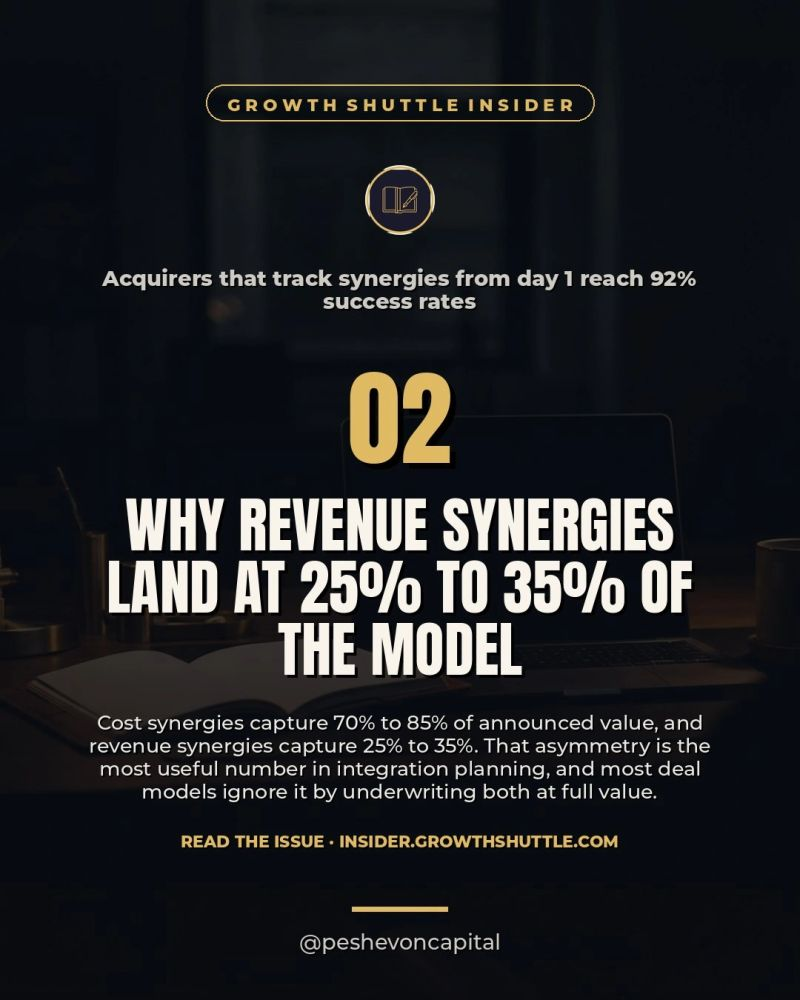
Cost synergies historically capture 70% to 85% of announced value. Revenue synergies capture 25% to 35%. A model carrying $30M of synergies split evenly between the two is realistically worth about $19M once those capture rates are applied, and the $11M difference was priced into what the buyer paid.
The asymmetry is structural. Cost savings are built into legal contracts: a duplicate ERP license canceled is money that stops leaving, and the savings start accruing the day the contract ends. Revenue synergies depend on a cross-sell motion that two sales teams have to run together while their comp plans, territories, and CRM definitions are still being merged.
One requires procurement discipline. The other requires two organizations to sell in coordination while half the org chart is still being redrawn.
When I review a synergy schedule in diligence, the first question is what share of the case sits on the revenue line. A model weighted toward revenue synergies is carrying the harder half of the case, and most deal teams price both sides at par. That mispricing shows up later in the hold, when the cost reductions are tracking to plan and the revenue case is still being explained by market conditions.
The most reliable move is to underwrite revenue synergies at the historical discount and hold the deal team to the cost case. Sponsors who price revenue synergies at full value are borrowing from the exit to justify the entry, because the realized figure will land closer to a third of the book while the cost savings deliver most of what the deal team underwrote.
Full breakdown in Growth Shuttle Insider.